Rich People Buy Assets First

“The goal isn’t to look rich. The goal is to become financially strong.”

Opening Story
Imagine two people receiving the same RM10,000 salary.
Person A gets excited about the new income.
The first thing they do is upgrade their car.
Then comes a bigger house, more expensive furniture, frequent holidays, the latest smartphone and a lifestyle that looks impressive from the outside.
Their income has increased.
But so have their monthly commitments.
Person B takes a different approach.
They continue living within their means and allocate part of their income towards building savings and acquiring assets.
They may not look as wealthy.
They may drive an ordinary car.
They may not post expensive holidays on social media.
But quietly, year after year, their financial position becomes stronger.
After several years, the difference becomes obvious.
One person has accumulated more things.
The other has accumulated more assets.
And that is an important distinction.
Today’s Lesson
Many people are taught to focus on income:
“I need to earn more money.”
Of course, increasing your income can help.
But income alone doesn’t create wealth.
What you do with that income matters.
There is a fundamental difference between income, expenses, liabilities and assets.
Your salary is income.
Your monthly bills are expenses.
A financial obligation that continuously takes money out of your pocket can become a liability.
An asset is something that has economic value and may contribute to your financial position over time.
The problem is that modern consumer culture constantly encourages us to buy things that make us feel wealthy rather than things that can make us financially stronger.
A new car can make you feel successful.
A luxury handbag can make you feel successful.
A bigger house can make you feel successful.
But appearances are not the same as financial strength.
Looking rich and being financially secure are two very different things.
Gold Mentoring Insight
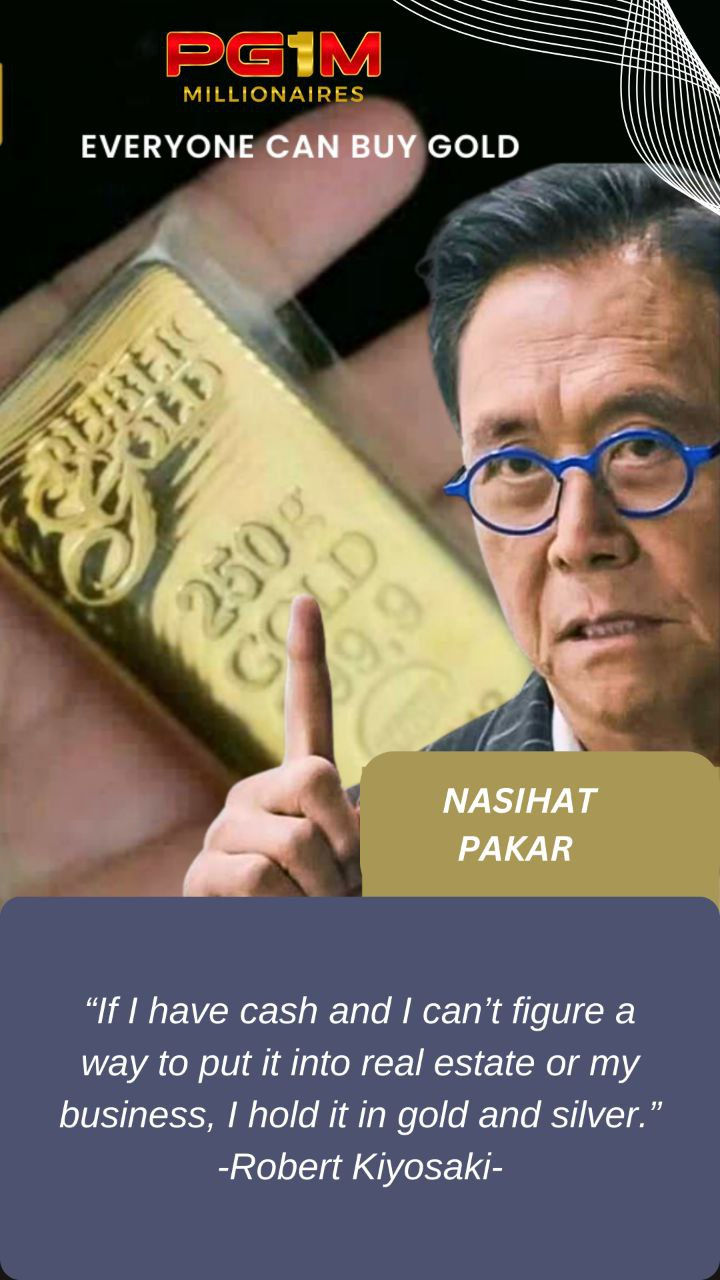
This is where the concept of gold becomes interesting.
When you purchase gold for long-term wealth preservation, you’re not simply buying something to display.
You’re acquiring a tangible asset.
Gold doesn’t generate regular income or dividends, and its market price fluctuates.
Therefore, it should not be treated as a guaranteed-profit investment or a replacement for an emergency fund, productive investments, or other appropriate financial assets.
But for someone who understands its role, physical gold can form one component of a diversified long-term wealth strategy.
The mindset is what matters..
Instead of asking:
“What can I buy with this money?”
Start asking:
“What can I own with this money?”
That one question can completely change your financial behaviour.
.
When you receive a bonus, do you immediately upgrade your lifestyle?
When your salary increases, do you increase your monthly commitments?
When you have extra cash, do you spend it—or allocate some towards assets and savings?
The objective isn’t to stop enjoying your money.
The objective is to make sure your money has a job before you spend it.
Practical Action
Today, take 15 minutes to conduct a simple Financial Ownership Audit.
...
Look at your current financial situation and divide your money into three categories:
1. What Do I Own?
List your savings, investments, gold, property, business interests and other assets.
Don’t worry about whether the list is impressive.
Be honest.
2. What Do I Owe?
Write down your outstanding loans, credit card balances, financing commitments and other debts.
Seeing the numbers clearly can be uncomfortable—but clarity creates control.
3. What Am I Building?
This is the most important question.
Ask yourself:
“If I continue my current financial habits for the next five years, will my financial position become stronger or weaker?”
If you don’t like the answer, don’t panic.
You don’t need to change everything overnight.
Start by redirecting a small portion of your income towards building your financial foundation.
The objective is progress.
Motivation of the Day
“Don’t spend your life trying to look wealthy. Spend your time building wealth.”
Final Thoughts
There is nothing wrong with enjoying the money you’ve worked hard to earn.
You deserve to enjoy your life.
But financial freedom requires balance.
You can enjoy today and prepare for tomorrow.
You can buy things you love and accumulate assets.
You can reward yourself without sacrificing your future.
The real question isn’t:
“Can I afford this?”
Sometimes, the better question is:
“Will buying this make my financial future stronger—or weaker?”
That question creates a different kind of consumer.
A more intentional one.
And over time, intentional decisions compound.
Remember:
Wealth isn’t about owning the most things.
It’s about owning more of what strengthens your financial future.
Start Your Gold Journey
If you want to understand how gold can fit into your broader financial strategy, my Gold Mentoring programme is designed to help you think beyond simply buying gold.
We’ll focus on the bigger picture:
Income → Saving → Asset Accumulation → Financial Discipline → Wealth Preservation → Legacy
My role is not to promise quick profits or tell you that gold will always increase in value.
My role is to help you understand the principles, avoid emotional financial decisions, and develop a disciplined approach that fits your own financial capacity and goals.
Because ultimately, the objective isn’t to accumulate gold just for the sake of owning gold.
The objective is to become a person who knows how to turn income into assets, assets into financial strength, and financial strength into a lasting legacy.
Don’t just work for money. Learn to build ownership.
Ida Maslina
Gold Advisor (Public Gold)


Comments